The jury and the public have had their say — feast your eyes on the winners of Architizer’s 14th Annual A+Awards. Subscribe to our Awards Newsletter to receive future program updates.
In today’s architectural discourse, the significance of a project extends far beyond form and function. It is increasingly defined by how it resonates with cultural context, human experience and the spirit of the era.
As the world’s largest architecture and design awards program, Architizer’s A+Awards celebrates meaningful design from across the globe, bringing together diverse voices that continue to define the future of the built environment.
With a portfolio of award-winning projects spanning diverse spatial typologies, Kuang Ming (Ray) Chou, founder and creative director of Vermilion Zhou Design Group, was invited to serve as a juror for the 14th edition of Architizer A+Awards. From the futuristic Intercity Bar and the dreamlike ‘Green Message’ spa to the culturally rooted Song Art Museum, Chou’s diverse spatial practices reveal an ongoing exploration of how design responds to different contexts.
In this interview, Chou shares his perspectives as both a juror and a design practitioner, exploring what defines excellence in design, how ideas take spatial form, and how design continues to evolve in today’s context.
Reflections on What Makes Great Design
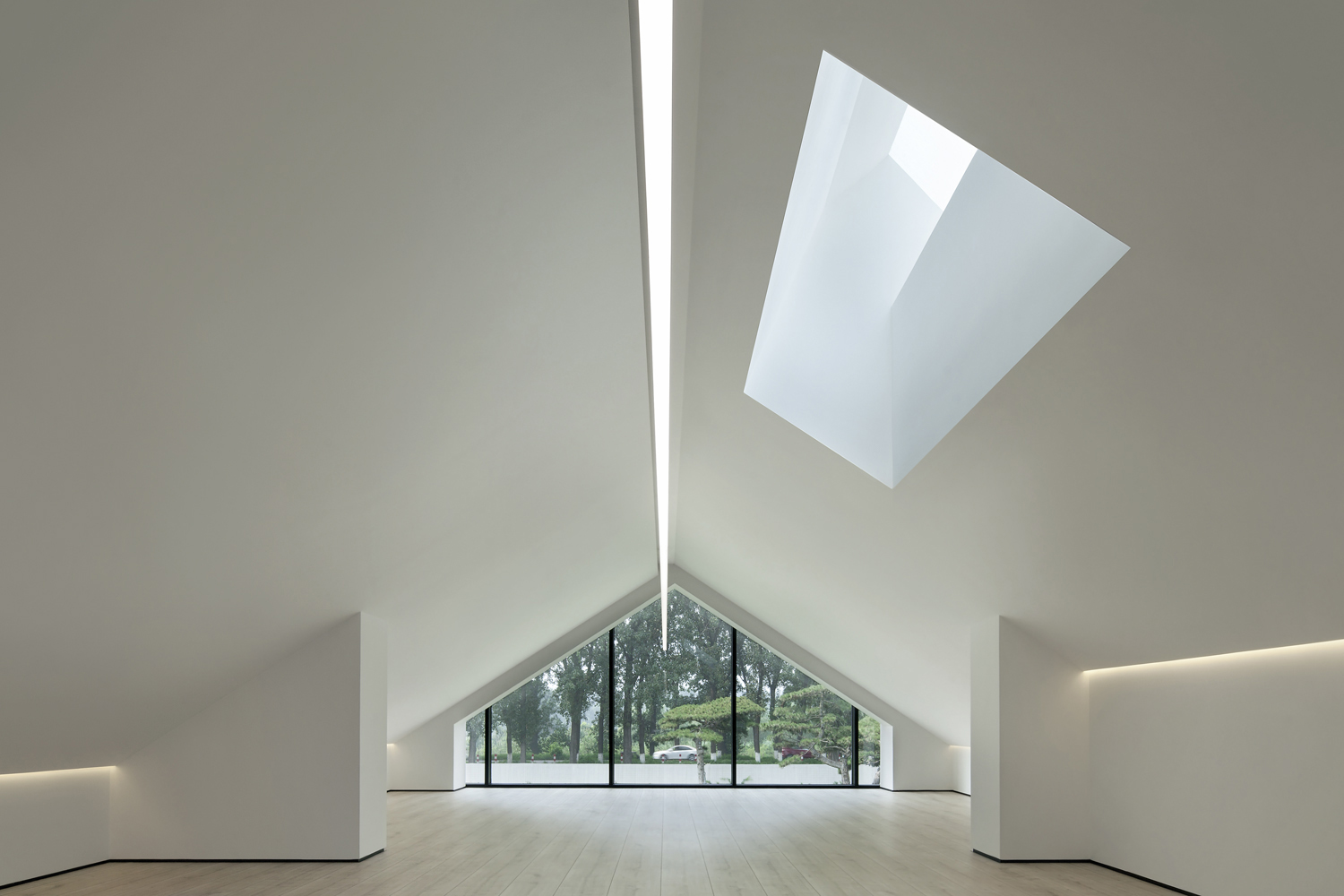
Song Art Museum by Vermilion Zhou Design Group, Beijing, China
Over the years, have there been any spaces that have left a lasting impression on you? What qualities do you believe these exceptional spaces share?
Kuang Ming Chou: Certainly. Antoni Gaudí’s Sagrada Família, for example, and the Luce Memorial Chapel at Tunghai University have left a deep impression on me. What truly moves me about these places is not simply their visual spectacle, but the immediate sense of light, air, and spatial order that unfolds upon entering.
Great spaces often share certain qualities: they follow an inherent logic, stay closely connected to nature, and never seek to overstate design itself. Instead, they invite people to pause, to feel, and to truly engage with the space—and that is what makes them memorable.
As Chinese projects increasingly gain recognition at Architizer’s A+Awards, what do you see as the key strengths of Chinese design today? And in your view, how can Chinese design develop a stronger voice internationally?
What stands out most in Chinese design today is a deeper cultural self-awareness. After years of drawing from international design languages, more designers are now returning to Eastern cultural roots, rethinking the connections between people and space, scale, order and nature. This cultural grounding is what gives Chinese design its distinctive identity.
Building an international presence is not about following global trends, but about understanding our own cultural identity and finding ways to express it. The key lies in moving beyond literal cultural references and translating deeper cultural insights into a design language relevant to today.
Design Practice: A Shared Logic Behind Diverse Spatial Expressions
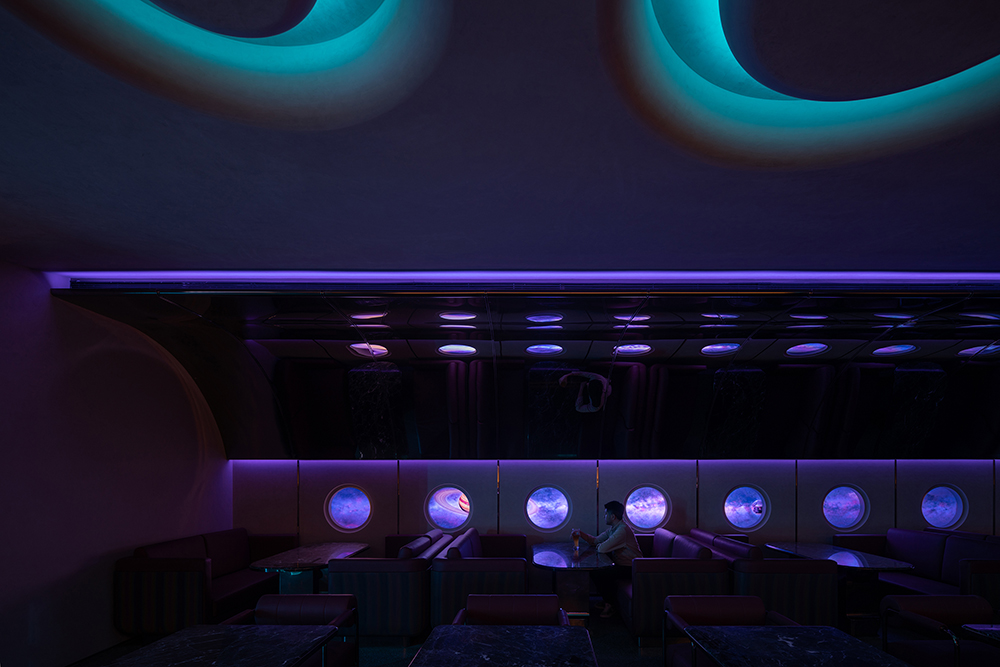
Intercity Bar by Vermilion Zhou Design Group, Shenzhen, China
From the futuristic Intercity Bar to the dreamlike ‘Green Message’ spa and the Eastern-rooted Song Art Museum, you’ve received A+Awards recognition for three consecutive years. Working across such diverse typologies, how do you shape the atmosphere and experience each space intends to convey? What is the underlying logic that anchors your design approach?
Everything begins with understanding the project at its core — who it serves, what it seeks to convey, and what experience the user truly needs. Style is never the starting point. Once these fundamentals are clear, the atmosphere begins to take shape.
The underlying logic behind these projects is consistent: starting with user needs and translating them into spatial language. From light and materiality to scale, circulation, or even emotional rhythm, every design decision serves what the space aims to convey, rather than pursuing form for its own sake. For me, the essence of design is not to create a space that simply appears distinctive, but to accurately express what the space is meant to convey.
Through your extensive practice in hospitality design, you’ve shaped a philosophy grounded in clarity, tranquility, and a deeper sense of inner calm. How are these ideas embodied in the recently completed Grand Ji Hotel?
The philosophy unfolds through different layers of experience. It begins with clarity — an environment shaped by order, refinement, and restraint, free from distraction. Tranquility then emerges through the interplay of light, material, sound, and scent, inviting a slower, more settled rhythm. Beyond these layers lies a deeper experience, where the space moves beyond function and fosters a sense of inner calm. These ideas are not approached as separate gestures, but are woven into a coherent experience that anchors the hotel’s spatial logic.
In today’s increasingly standardized and homogeneous hotel market, what do you see as the key to creating a distinctive experience through design? Where can design make a difference, and does it have limits?
The starting point is always the brand’s vision and identity. Understanding what the brand believes in, who it serves, and what kind of experience it seeks to deliver gives design its direction. Without this clarity, design risks creating only superficial differences rather than authentically expressing the brand itself.
At its core, hospitality is still about three essentials: a refreshing shower, a restful sleep, and a satisfying meal. The role of design is to build upon these fundamentals — to articulate the brand’s identity, translate its ethos into space, and shape a distinctive experience.
Yet, the role of design has its limits: it cannot replace operations or service. It plays an important role, yet it is not the whole story.
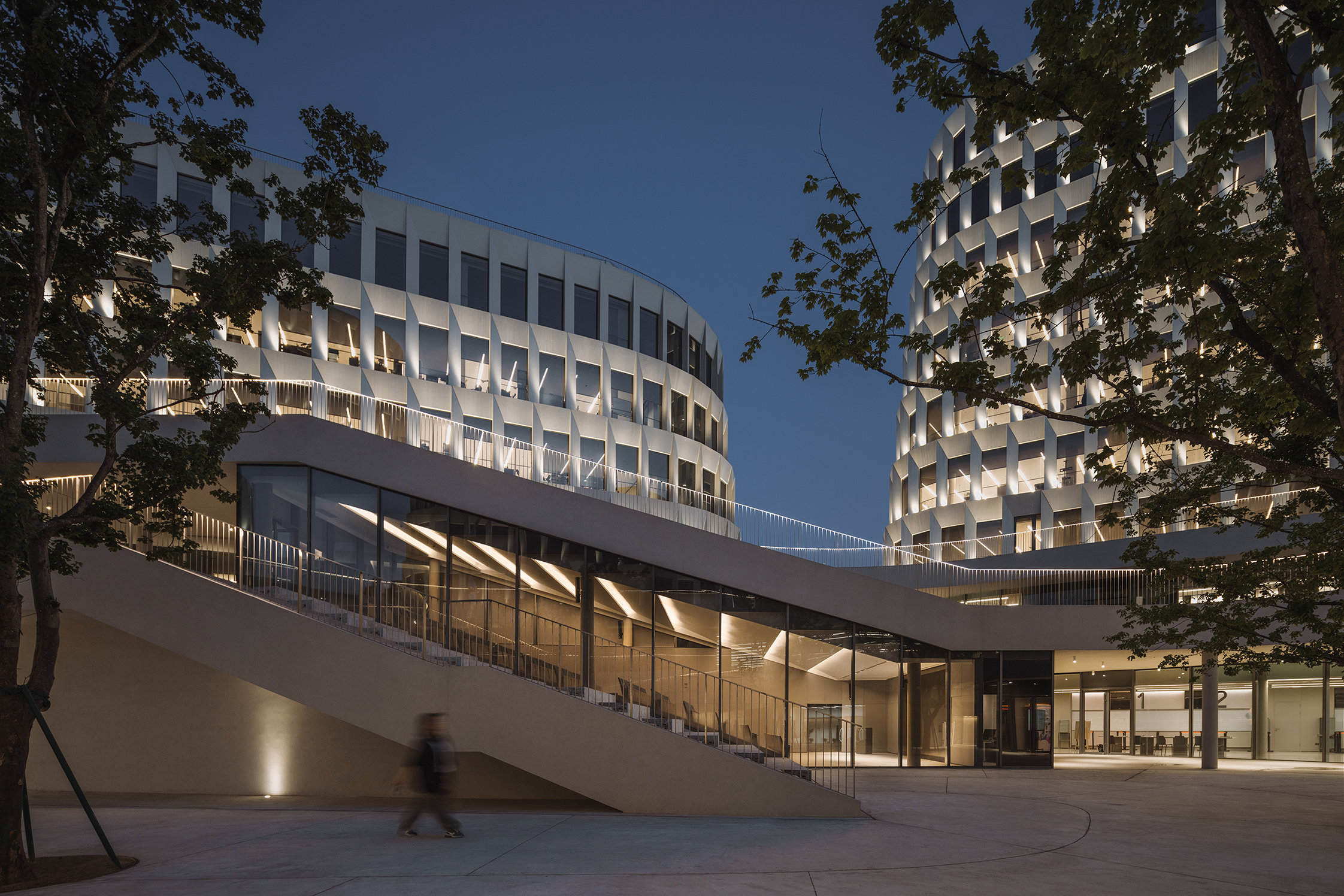
H World Group Global Headquarters by Vermilion Zhou Design Group, Shanghai, China
As the Chief Designer for H World Group, you’ve played a key role in the design evolution of its diverse hospitality portfolio—from economy hotels like HANTING and NI HAO to mid-scale and upscale brands including JI, MERCURE, and JOYA. Beyond individual projects, you have established holistic design frameworks that refine each brand’s identity to create consistent spatial experiences across properties. From your perspective, what is the underlying design logic behind H World Group’s diverse hospitality brands? And how does it support the group’s ambition to redefine hospitality in China?
I believe the answer still lies in returning to the fundamentals. Across H World Group’s brand tiers, the underlying design logic remains consistent: starting not with style, but with contemporary Chinese lifestyles and the essential needs of guests. This approach is rooted in a genuine understanding of Chinese culture and contemporary living.
It is not about expressing culture through visual symbols alone, but about translating deeper cultural insights—such as Chinese perspectives on order, proportion, comfort, and human relationships — into contemporary hospitality experiences. This depth is central to H World’s vision — ensuring each brand speaks precisely to its audience while establishing a design language rooted in the Chinese context.
As China’s leading hospitality group, H World now has a presence in 21 countries worldwide. In a globalized market, what do you see as essential for hotel brands to establish international relevance and competitiveness across diverse cultural contexts?
Global competitiveness begins with a clear sense of identity. A brand needs to define its core values — what it believes in, what it offers, and what experience it promises consistently — before engaging with different cultural contexts. Markets may vary, but strong brands adapt without losing their essence.
Going global is not about becoming more like others, but about staying true to a brand’s own identity. Only then can it truly resonate with people around the world.
Design Sensibility: Creating Value in an Ever-evolving Context
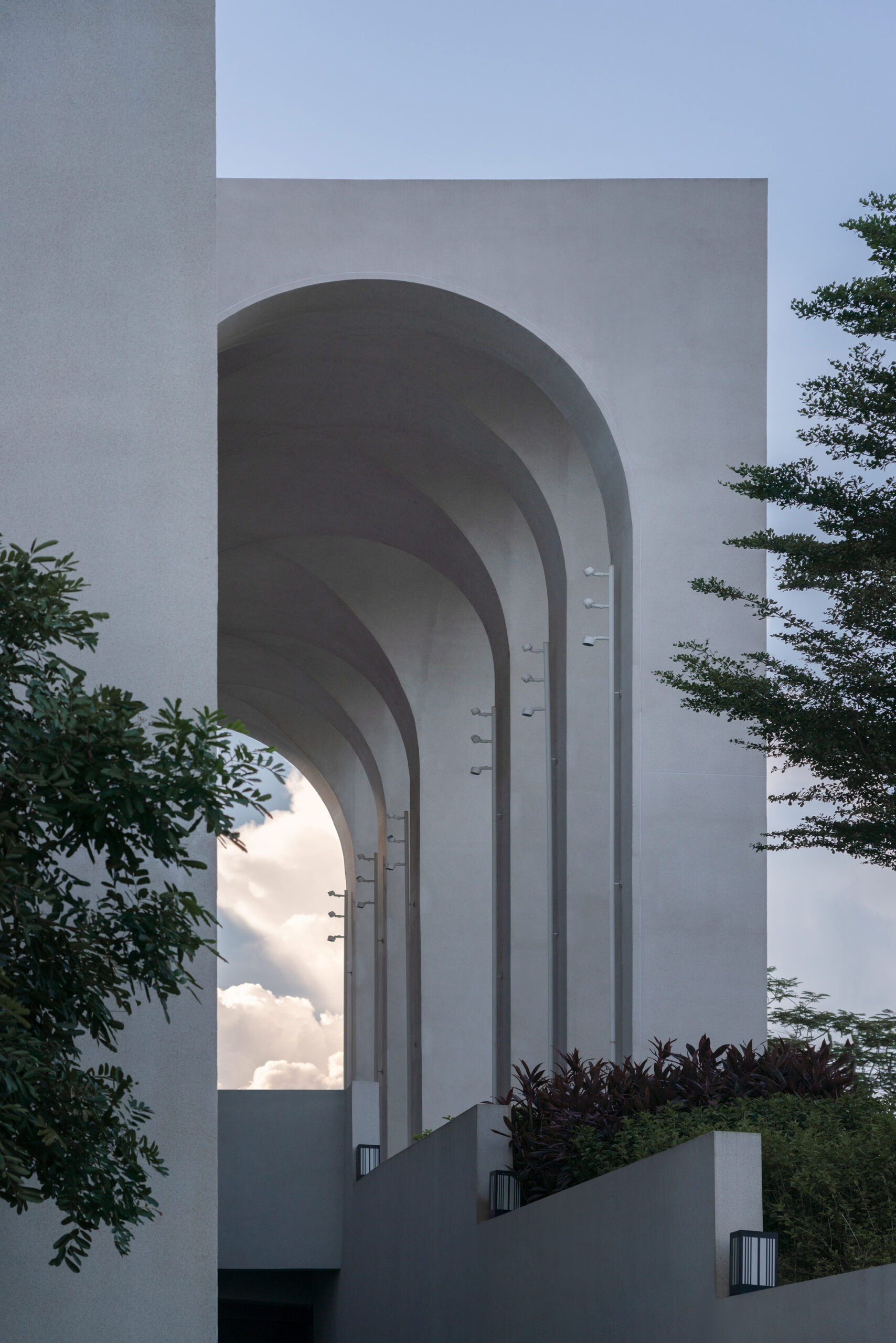
Enhance International Medical Center by Vermilion Zhou Design Group, Hainan, China
A designer’s creative vision is built upon sustained observation, experience, and reflection. What has most deeply shaped your design sensibility, and how is it translated into spatial language within your projects?
For me, the most meaningful input comes from observing the world around us. Design is not only about design itself; it is rooted in a deeper understanding of life. The way we perceive people, cities, nature, light, materials and emotional shifts within a space shapes our design sensibility.
Within a project, these observations are not directly reproduced, but translated into spatial language through scale, light, materials, circulation, and rhythm — to create a spatial expression unique to each project.
Vermilion Zhou Design Group has been dedicated to interior design for more than two decades. What core philosophy has guided the studio’s growth? And with AI and new technologies increasingly influencing the design industry, what remains irreplaceable about designers?
The philosophy that has guided us throughout this journey is actually very simple: to create design that people can truly feel — its beauty, its value and its presence in everyday life. Design is never about form alone; it must ultimately return to human experience, everyday use and the test of time.
AI and new technologies will undoubtedly reshape many aspects of the design process and enhance efficiency. But what remains irreplaceable for designers is their sensitivity — the ability to understand people, perceive space and discern what is essential and what is excessive. These insights are rooted in years of observation and reflection—something technology cannot replace.
Looking ahead, what matters for designers is not how well we use tools, but how deeply we perceive, understand and respond to the world around us. It is this depth of perception that allows design to resonate and endure.
The jury and the public have had their say — feast your eyes on the winners of Architizer’s 14th Annual A+Awards. Subscribe to our Awards Newsletter to receive future program updates.
The post Cultural Grounding Over Global Trends: Kuang Ming Chou on Where Chinese Design Finds Its Identity appeared first on Journal.